
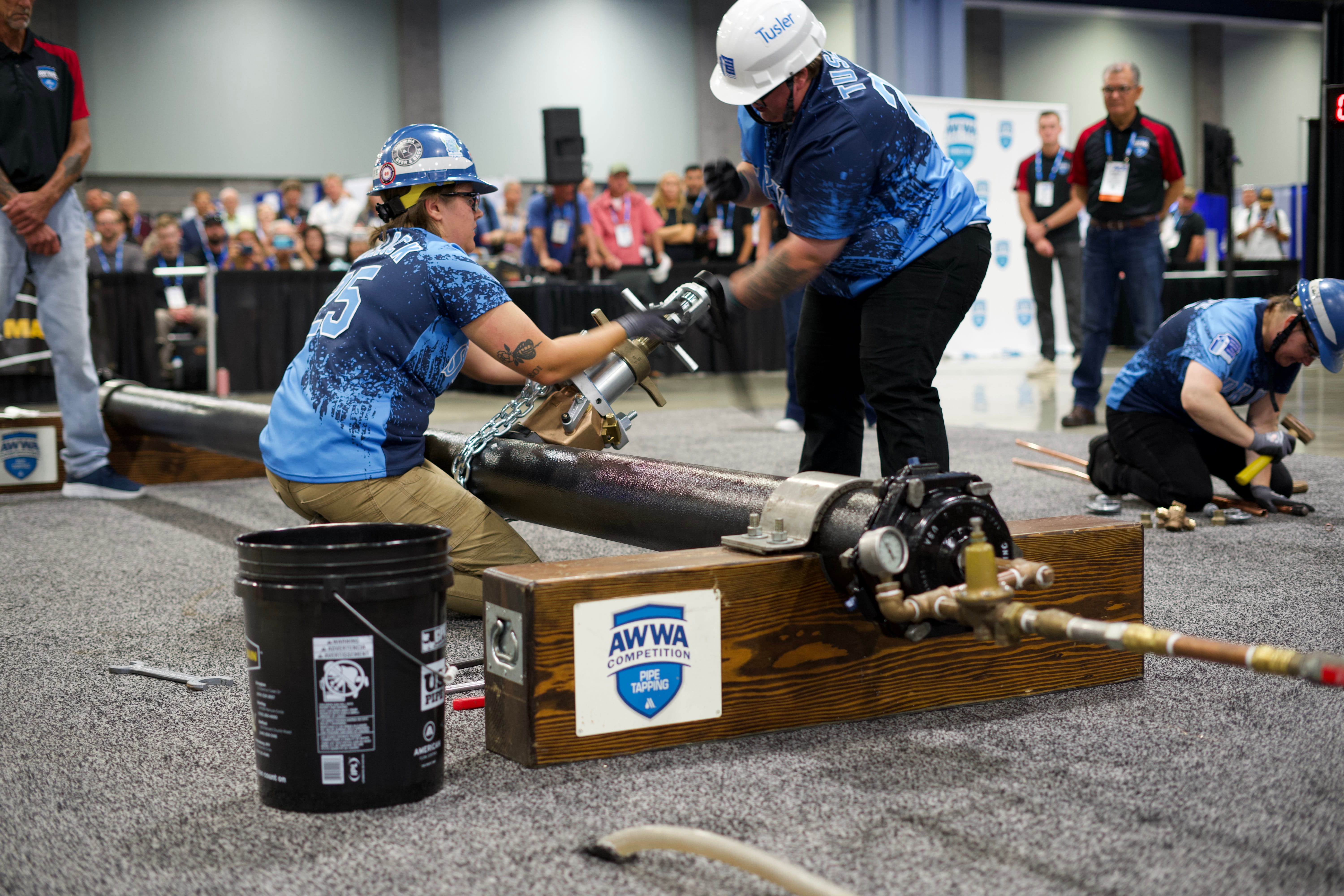
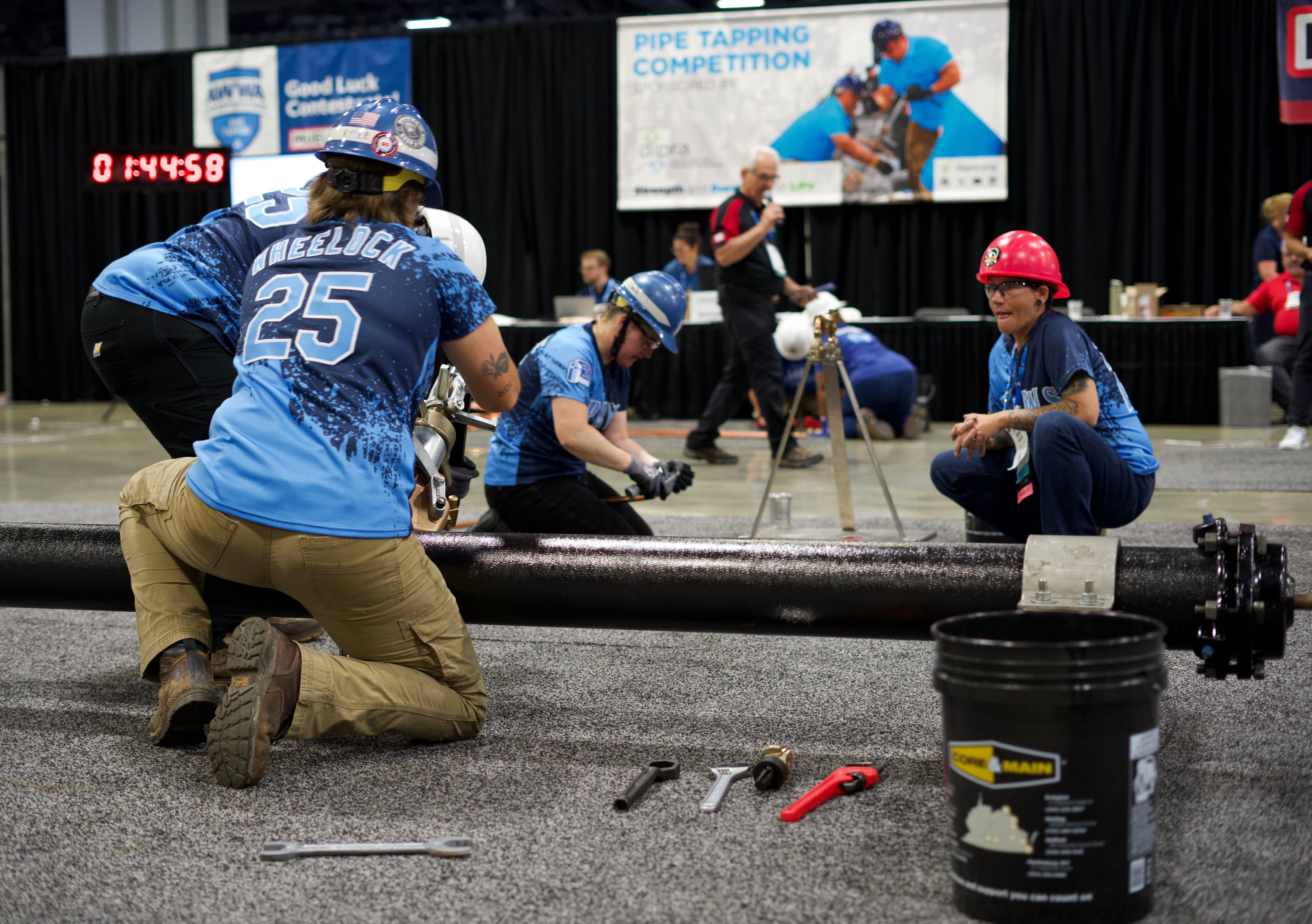
The Ductile Iron Pipe Research Association (DIPRA) attended ACE26, the American Water Works Association (AWWA)’s annual conference and exposition, where water industry leaders gathered to discuss the most pressing challenges facing drinking water and wastewater systems nationwide.
Among the interesting sessions was a fireside chat with Jessica Kramer, Assistant Administrator for the U.S. Environmental Protection Agency’s Office of Water, moderated by AWWA Executive Director of Government Affairs Tracy Mehan. One of the top issues for the water industry was a key part of the discussion: how to restore funding for both the Drinking Water State Revolving Fund (DSRF) and Clean Water State Revolving Fund (CWSRF), when, at the same time, much of the money is being redirected to other congressional priorities.
Kramer emphasized that addressing aging infrastructure remains a top focus for the Administration and highlighted concerns that billions of dollars already allocated through SRF programs have yet to be committed to projects.
“That money is being peeled away and put into [congressionally directed funding],” Kramer said, encouraging audience members to address this in meetings with lawmakers and staff this week on Capitol Hill.
DIPRA has been advocating for increased SRF investment, with DIPRA President David Cole recently underscoring the importance of these programs in a column for the Washington Times:
“The promise of safe, reliable water is not a luxury; it’s a fundamental public health and safety requirement. Unfortunately, much of the infrastructure that delivers that promise has exceeded its service life, and there are too many communities that do not have access to safe and reliable drinking and wastewater systems.”
“Congress has a great opportunity to safeguard public health and support economic growth by strengthening its long-term commitment to the state revolving funds administered by the U.S. Environmental Protection Agency (EPA), specifically the Drinking Water State Revolving Fund (DWSRF) and the Clean Water State Revolving Fund (CWSRF). There are two immediate actions that Congress can take: appropriate $3.25 billion each for the two SRF programs for FY27; and provide a robust, needs-based reauthorization of both programs. It is critical that Congress act now. As communities across the country are about to experience a water funding cliff this year, as vital supplemental SRF investments are set to expire.”
Kramer noted that approximately $14.8 billion remains uncommitted through SRF programs, representing significant potential for infrastructure improvements in communities across the country.
According to the EPA, 44 states have obligated less than 22% of the SRF funding they have received for projects. EPA has taken a “carrot” approach to encouraging states to obligate available funds, focusing on collaboration and technical assistance to better understand barriers to project implementation and accelerate deployment of resources.
“We’re going to unapologetically get that money out the door,” Kramer said.
Kramer also discussed efforts to make federal financing tools more accessible, including potential improvements to the Water Infrastructure Finance and Innovation Act (WIFIA) program. The EPA is exploring ways to reduce barriers for communities seeking assistance, including reviewing technical requirements, application costs, and opportunities to expand practical technical assistance for smaller and rural systems.
As conversations at ACE26 demonstrated, ensuring that available infrastructure funding reaches critical projects remains a top priority for both industry leaders and policymakers. DIPRA will continue advocating for policies and investments that support resilient, long-lasting water infrastructure nationwide.
In The News


Resources
There are no matching PDF resources for this page.
There are no matching video resources for this page.
Resources
There are no matching PDF resources for this page.
There are no matching video resources for this page.


